

Introduction to 158.63.258.200
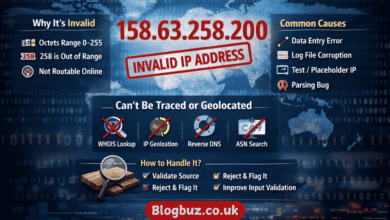
The address 158.63.258.200 appears at first glance to be a normal IPv4 address, the kind commonly used for servers, websites, routers, and internet-connected devices across the world. Many users who encounter this number assume it belongs to a real network system because its structure resembles standard internet protocol formatting. IPv4 addresses are written in four sections separated by periods, and each section is called an octet. These octets help computers communicate with one another through digital networks by providing unique identifiers for devices connected to the internet. However, a closer inspection of 158.63.258.200 reveals an important issue that makes it invalid. In IPv4 addressing, every octet must contain a number between 0 and 255. The third octet in this address is 258, which exceeds the maximum allowed limit. Because of this, 158.63.258.200 cannot function as a legitimate internet address. Even though it is invalid, many people search for strange IP addresses like this because they appear in online tutorials, gaming communities, server logs, fictional hacking videos, or cybersecurity discussions. Learning why this address is incorrect helps beginners understand how internet protocols operate and why networking standards are essential for stable digital communication.
Technical Structure and Why the Address Is Invalid
To fully understand why 158.63.258.200 cannot work on the internet, it is important to know how IPv4 addressing operates behind the scenes. IPv4 uses a 32-bit numerical structure divided into four 8-bit sections called octets. Since each octet contains only 8 bits, the highest decimal number possible is 255, which corresponds to the binary value 11111111. Any value larger than 255 cannot fit within a standard IPv4 octet, making the address structurally invalid. In the case of 158.63.258.200, the third section violates this rule because 258 is beyond the acceptable range. Networking devices such as routers, switches, servers, and operating systems are designed to automatically reject addresses that fail validation checks. If someone attempted to assign this address to a device or use it in a browser, the system would produce an error because the format does not comply with internet protocol standards. This demonstrates how strict internet communication rules are and why precise formatting matters in networking environments. Without these standards, devices would not know how to route information correctly, leading to widespread communication failures across digital networks.
Cybersecurity and Educational Importance
Although 158.63.258.200 is not a real usable IP address, it still has educational value in cybersecurity and software development. Students learning about networking often study invalid addresses to understand how validation systems work and how mistakes can affect digital communication. Cybersecurity professionals also analyze malformed addresses because attackers sometimes use incorrect or corrupted data to test firewalls, confuse logging systems, or exploit poorly coded applications. Modern software applications are built with validation systems that automatically reject invalid input, including incorrect IP addresses like 158.63.258.200. For example, websites, cloud dashboards, and networking tools usually check whether each octet falls within the proper numerical range before accepting user input. This protects systems from errors and helps maintain stable operations. Invalid addresses may also appear in spam traffic, fake server logs, or fictional online content, causing curious users to search for their meaning. As internet security becomes increasingly important, understanding how to recognize invalid technical information has become a valuable digital skill for students, developers, and general internet users alike.
Internet Culture and Public Curiosity About Strange IP Addresses
The popularity of unusual IP addresses such as 158.63.258.200 also reflects growing public curiosity about technology and online systems. In movies, games, and fictional hacking scenes, creators often display fake IP addresses to avoid revealing real systems or personal information. These fake addresses are designed to look realistic while remaining technically unusable. Many viewers who notice these numbers search online to determine whether they are real, hidden, or connected to secret networks. This curiosity has created an internet culture where strange IP addresses become discussion topics in forums, social media posts, and educational blogs. Some people mistakenly believe that invalid addresses belong to private servers, underground databases, or hidden websites, even though networking standards clearly show they cannot function. Educational discussions surrounding addresses like 158.63.258.200 help separate technical reality from online myths and misinformation. They also encourage users to learn more about internet infrastructure, binary systems, routing protocols, and digital communication technologies. As technology becomes more integrated into daily life, public interest in networking and cybersecurity continues to grow rapidly.

Conclusion and Broader Significance of 158.63.258.200
In conclusion, 158.63.258.200 is an invalid IPv4 address because the number 258 exceeds the maximum allowed octet range of 0 to 255. While it cannot operate as a legitimate internet address, it still serves as an important educational example for understanding networking principles, cybersecurity practices, and internet protocol validation. The address highlights how carefully structured internet communication systems are and why strict standards are necessary for reliable global connectivity. It also demonstrates the importance of data validation in software development and enterprise networking environments. Beyond technical discussions, the popularity of unusual addresses like 158.63.258.200 shows how curious people have become about the hidden systems powering the digital world. Whether encountered in tutorials, fictional media, or online discussions, strange IP addresses often inspire users to explore how the internet truly works. By learning why this address is invalid, readers gain a deeper understanding of IPv4 structure, binary limitations, and the rules that keep modern digital communication organized and secure. As the internet continues evolving through cloud computing, cybersecurity advancements, and IPv6 adoption, foundational knowledge about addressing systems will remain essential for anyone interested in technology and online infrastructure.
Understanding 158.63.258.200
158.63.258.200 looks like a normal IPv4 address, but it is actually invalid because one section contains the number 258. In IPv4 addressing, every section must stay between 0 and 255. Since 258 exceeds this limit, the address cannot work on the internet. Invalid addresses like this are often used in tutorials, fictional hacking scenes, or educational examples to teach networking rules. Learning about addresses such as 158.63.258.200 helps students and internet users understand how IP systems function, why validation matters, and how networking devices maintain accurate communication across digital networks and online systems worldwide today.Understanding 158.63.258.200
158.63.258.200 appears to be a regular IPv4 address, but it is actually invalid because one part of the address breaks internet protocol rules. IPv4 addresses are made of four numerical sections called octets, and each octet must contain a value between 0 and 255. In this address, the third octet is 258, which is higher than the allowed maximum value. Because of this, networking devices such as routers, servers, and operating systems would reject the address immediately.
Even though 158.63.258.200 cannot function as a real internet address, it is still useful for educational purposes. Teachers, developers, and cybersecurity professionals often use invalid IP addresses to explain how internet validation systems work. These examples help students understand binary limits, network structure, and the importance of accurate formatting in digital communication. Strange IP addresses also appear in movies, games, and fictional hacking scenes, making many people curious about their meaning. Learning about invalid addresses like 158.63.258.200 helps users better understand how internet systems operate and why strict technical standards are necessary for secure and reliable online communication across the modern digital world.
More About 158.63.258.200
The internet depends on strict technical rules to ensure devices can communicate correctly. Every website visit, online game, email, and video stream relies on valid IP addresses that follow proper formatting standards. When an invalid address such as 158.63.258.200 appears, systems automatically recognize the error and prevent communication. This process is important because incorrect addresses could confuse routing systems and disrupt data transfer across networks. Routers and servers are programmed to validate addresses before accepting them, which helps maintain stability and security throughout the internet.
Invalid IP addresses are also important in cybersecurity training. Security experts analyze malformed data to test firewalls, applications, and monitoring systems. Attackers sometimes use unusual or broken data formats to discover weaknesses in poorly designed software. Because of this, developers create validation systems that reject invalid entries immediately. An address like 158.63.258.200 is a simple example of how input validation protects digital systems from errors and potential security risks.
Another reason people search for strange IP addresses is curiosity created by online culture. Movies, hacking videos, and fictional stories often display fake addresses to avoid exposing real servers or private systems. These addresses are designed to look realistic while remaining technically unusable. As more people become interested in technology, networking, and cybersecurity, searches for unusual addresses continue increasing. Understanding why 158.63.258.200 is invalid helps users learn the basics of internet communication and develop stronger knowledge of how modern digital infrastructure operates every day.Final Insight on 158.63.258.200
Learning about invalid IP addresses like 158.63.258.200 is useful because it builds a clear understanding of how the internet maintains order and reliability. The IPv4 system may look simple on the surface, but it follows strict mathematical rules that prevent errors in communication. Each device connected to a network must have a valid address so data packets can travel to the correct destination without confusion or loss.
When an address breaks the rules, like using a number above 255 in one section, it is instantly rejected by networking systems. This automatic rejection is part of what keeps the internet stable even when billions of devices are connected at the same time. It also shows how important precision is in technology.
Overall, 158.63.258.200 is not a real or usable IP address, but it serves as a helpful example for learning networking basics, improving cybersecurity awareness, and understanding how digital systems validate information before processing it.
