

Introduction to Air Resistance
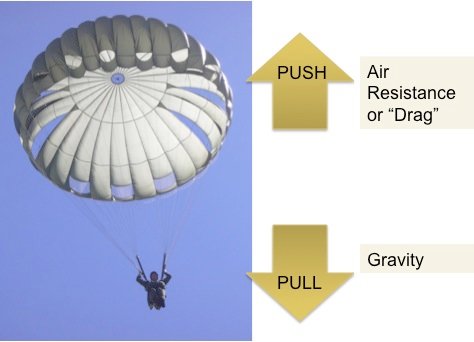
Air resistance definition is a force that opposes the motion of an object as it travels through the air. It is also commonly known as drag. Whenever a car moves down a road, an airplane flies through the sky, or even when a person runs, the surrounding air pushes against the moving object. This invisible force slows objects down and affects how fast or efficiently they can move. Air resistance exists because air is made of tiny particles that collide with moving surfaces. Although people cannot usually see air resistance, its effects can easily be observed in everyday life. For example, a feather falls more slowly than a stone because the feather experiences greater air resistance compared to its weight. In science and engineering, understanding air resistance is extremely important because it influences transportation, sports, weather systems, and many other fields. Engineers spend years designing vehicles and aircraft in ways that reduce drag so they can move faster while using less fuel. Athletes also study air resistance to improve performance in activities such as cycling, racing, and swimming. Air resistance is not always harmful, however, because it can also provide safety. Parachutes work by increasing air resistance, allowing people to descend slowly and safely from high altitudes. Without air resistance, many ordinary activities and technologies would behave very differently. The study of this force helps scientists explain motion and predict how objects interact with the atmosphere around them.
How Air Resistance Works
Air resistance occurs when a moving object comes into contact with air particles. As the object moves forward, the air particles push against it, creating a force that acts in the opposite direction of motion. The faster the object moves, the stronger the resistance becomes. This is why driving a car at high speed requires more energy than driving slowly. Air resistance depends on several factors, including speed, shape, size, and surface texture. Objects with large surface areas usually experience more drag because they collide with more air particles. For instance, a flat sheet of paper falls more slowly than a crumpled piece of paper because the flat sheet exposes a larger area to the air. Shape also plays a major role in determining the amount of resistance. Streamlined shapes, such as those used in airplanes and sports cars, allow air to flow smoothly around the object, reducing drag and improving efficiency. Rough surfaces can increase turbulence and create additional resistance, while smoother surfaces help minimize friction with the air. Density of the air is another important factor. At higher altitudes where the air is thinner, there is less resistance compared to lower altitudes where the air is denser. Scientists often use mathematical formulas to calculate drag force and predict how objects will move through the atmosphere. In physics, air resistance is considered a type of friction because it resists motion between an object and a fluid, in this case air. The balance between gravity and air resistance determines how fast falling objects accelerate. Eventually, some objects reach terminal velocity, which is the constant speed achieved when air resistance becomes equal to the force of gravity pulling the object downward.air resistance definition
Importance of Air Resistance in Daily Life
Air resistance plays a significant role in many aspects of everyday life, even though most people rarely think about it. Transportation systems are heavily influenced by drag forces. Cars, motorcycles, trains, and airplanes are designed with aerodynamics in mind so they can move efficiently through the air. Automobile manufacturers test vehicles in wind tunnels to reduce air resistance and improve fuel economy. A car with poor aerodynamic design must work harder to overcome drag, leading to increased fuel consumption and higher costs. In aviation, air resistance is one of the most important forces affecting flight performance. Pilots and engineers must carefully balance lift and drag to ensure aircraft can travel safely and efficiently. Sports also provide excellent examples of air resistance in action. Cyclists wear tight clothing and aerodynamic helmets to reduce drag and increase speed. Swimmers use smooth suits and streamlined body positions to move through water and air more effectively. In track events, runners often lean forward slightly to reduce resistance and maintain momentum. Air resistance also affects weather and natural phenomena. Wind patterns, storms, and the movement of airborne particles are influenced by interactions between moving air masses and resistance forces. Even simple activities such as throwing a ball involve air resistance. A baseball or cricket ball slows down as it travels because the air pushes against it. Air resistance can also provide protection and safety. Seat belts and airbags are not directly related to air resistance definition, but parachutes are a perfect example of using drag for safety purposes. Skydivers rely on parachutes to create large amounts of resistance that slow their descent and prevent injury. Without air resistance definition parachuting would be impossible and dangerous. This force influences technology, recreation, science, and daily experiences in countless ways.
air resistance definition in Science and Engineering
Scientists and engineers study air resistance definition to improve designs, increase efficiency, and solve practical problems. In engineering, reducing drag is often a major goal because it helps save energy and improve performance. Modern aircraft are carefully shaped to minimize resistance while maximizing lift. Engineers use computer simulations and wind tunnel experiments to test how air flows around different surfaces. High-speed trains are designed with pointed fronts and smooth exteriors so they can travel rapidly without creating excessive drag or noise. In the automotive industry, sports cars and electric vehicles are built with aerodynamic curves to improve fuel efficiency and battery performance. Space exploration also involves understanding air resistance definition. Rockets experience intense drag while passing through Earth’s atmosphere during launch. Engineers must calculate these forces accurately to ensure successful missions. In addition, scientists studying falling objects often conduct experiments involving air resistance definition
to understand motion and gravity more clearly. One famous example is the comparison between a feather and a hammer dropped on the Moon. Because the Moon has almost no atmosphere, both objects fall at the same speed, showing that air resistance definition is responsible for the slower fall of lighter objects on Earth. air resistance definition is also important in architecture and construction. Buildings and bridges must be designed to withstand strong winds and aerodynamic forces. Skyscrapers often have shapes that reduce wind resistance to prevent structural damage. Renewable energy technologies such as wind turbines are carefully engineered to use air movement efficiently. The blades of turbines are designed to interact with air resistance definition and lift in ways that maximize electricity generation. Scientists continue researching new materials and designs that can reduce drag and improve performance in transportation and technology. From sports equipment to spacecraft, the principles of air resistance influence innovation and modern engineering around the world.
Conclusion and Future Understanding of air resistance definition

air resistance definition is one of the most important forces affecting motion in the natural and technological world. It is the invisible force that opposes movement through the air and influences how objects travel, fall, fly, and perform. Although it may seem simple at first, air resistance involves complex interactions between moving objects and air particles. Factors such as speed, shape, size, and air density all determine the amount of drag an object experiences. This force affects daily life in countless ways, from driving vehicles and playing sports to flying airplanes and using parachutes. Scientists and engineers rely on the study of air resistance definition to improve transportation, increase energy efficiency, and develop advanced technologies. Aerodynamics has become a major field of research because reducing drag can save fuel, lower costs, and enhance performance. At the same time, air resistance can also be useful by providing stability and safety in systems such as parachutes and wind-resistant structures. Understanding air resistance definition helps explain why different objects move differently and why streamlined designs are so effective. As technology continues to advance, researchers will likely discover even better ways to manage and control drag forces. Electric cars, high-speed aircraft, and future transportation systems will depend heavily on aerodynamic improvements. Environmental concerns also make efficient design more important because reducing drag can lower energy consumption and decrease pollution. Air resistance may be invisible, but its impact is everywhere. From the smallest falling leaf to the largest airplane crossing the sky, this force shapes movement and performance throughout the world. By studying and understanding air resistance, people can continue creating safer, faster, and more efficient technologies for the future.air resistance definition Air resistance depends on several factors, including speed, shape, size, and surface texture. Objects with large surface areas usually experience more drag because they collide with more air particles. For instance, a flat sheet of paper falls more slowly than a crumpled piece of paper because the flat sheet exposes a larger area to the air. Shape also plays a major role in determining the amount of resistance. Streamlined shapes, such as those used in airplanes and sports cars, allow air to flow smoothly around the object, reducing drag and improving efficiency. Rough surfaces can increase turbulence and create additional resistance, while smoother surfaces help minimize friction with the air. Density of the air is another important factor. At higher altitudes where the air is thinner, there is less resistance compared to lower altitudes where the air is denser.
