

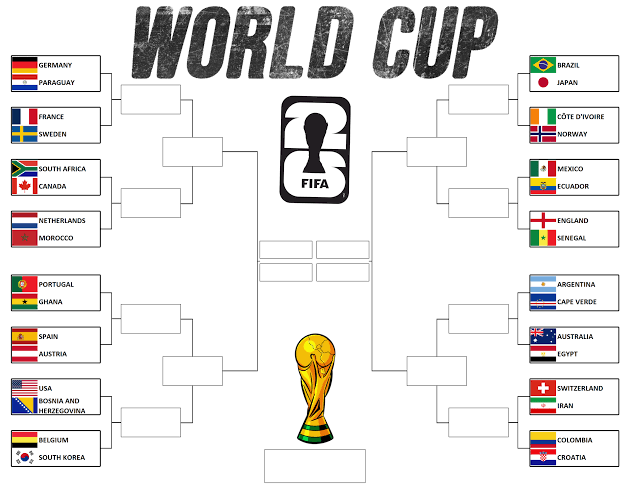
The FIFA World Cup is the most prestigious football tournament in the world, bringing together the best national teams from every continent to compete for the ultimate prize in international football. Every four years, billions of fans eagerly watch the tournament unfold, celebrating unforgettable goals, dramatic upsets, and historic championship victories. While the group stage introduces the competing teams and determines which nations advance, the real excitement begins during the knockout phase. This stage is organized using FIFA World Cup brackets, which provide a clear visual path showing how each team progresses toward the final. Whether you are a lifelong football supporter or someone watching the tournament for the first time, understanding the FIFA World Cup bracket helps you follow every match, predict potential winners, and appreciate the structure of the world’s biggest sporting event.
A FIFA World Cup bracket is essentially a tournament chart that displays the knockout rounds in a single, organized layout. Every qualified team occupies a position within the bracket, and each match determines which nation advances to the next round. As the tournament progresses, winning teams continue moving forward while losing teams are immediately eliminated. This single-elimination format creates an atmosphere of intense pressure because there are no second chances. Every goal, save, and tactical decision can determine whether a nation’s dream of becoming world champion continues or comes to an end.
The concept of tournament brackets has become one of the most recognizable elements of the FIFA World Cup. Fans across the globe print blank brackets before the knockout stage begins, making predictions about which teams will reach the quarterfinals, semifinals, and ultimately lift the famous FIFA World Cup Trophy. Sports websites, television broadcasters, and social media platforms all feature interactive brackets that automatically update after every match, making it easier than ever for supporters to follow the competition.
The structure of FIFA World Cup brackets has changed throughout history. When the tournament began in 1930, different formats were used depending on the number of participating nations. Some tournaments relied on multiple group stages before determining a champion, while others experimented with direct knockout rounds. As football continued to grow internationally, FIFA gradually introduced a more consistent format that balanced fairness with excitement.
For many years, the FIFA World Cup consisted of 32 teams. These teams were divided into eight groups of four, with the top two teams from each group advancing to the Round of 16. From that point onward, the tournament followed a straightforward knockout structure consisting of the Round of 16, quarterfinals, semifinals, third-place playoff, and final. This format became familiar to football fans worldwide and produced some of the greatest moments in sporting history.
FIFA World Cup Brackets: The Complete Guide to the Knockout Stage
Beginning with the 2026 FIFA World Cup, FIFA expanded the tournament to include 48 participating nations. This significant change introduced a larger knockout bracket beginning with the Round of 32 instead of the traditional Round of 16. The expanded format provides more opportunities for countries from every confederation to participate while increasing the total number of knockout matches. For fans, this means more high-stakes games, additional excitement, and a much larger bracket to follow throughout the tournament.
Understanding how the FIFA World Cup bracket works is relatively simple. After the completion of the group stage, qualified teams are assigned positions in the knockout bracket based on their group standings. Generally, group winners face runners-up from different groups, ensuring that teams from the same group cannot immediately play each other again. Once the bracket is finalized, every match becomes an elimination game. If the score remains tied after the standard ninety minutes of play, the match proceeds to extra time consisting of two fifteen-minute periods. If neither team scores the winning goal during extra time, the contest is decided through a penalty shootout. The victorious team advances while the losing nation is eliminated from the tournament.
FIFA World Cup Brackets Explained: Format, Rounds, and Tournament Structur
The Round of 32 in the expanded 2026 format marks the beginning of the knockout stage. Thirty-two teams compete in sixteen elimination matches, with only sixteen nations surviving to continue their World Cup journey. Every fixture carries enormous significance because even tournament favorites can be eliminated by a single unexpected defeat. This round often produces thrilling encounters between traditional football powers and emerging nations looking to create history.
Following the Round of 32 comes the Round of 16, where only the strongest teams remain. The level of competition becomes noticeably higher as every nation dreams of reaching the quarterfinals. Coaches become increasingly tactical, defensive organization becomes more important, and individual moments of brilliance often determine the outcome of closely contested matches. Throughout World Cup history, the Round of 16 has witnessed numerous unforgettable surprises, proving that no team can ever be underestimated in knockout football.
The quarterfinals represent another major milestone within the FIFA World Cup bracket. At this stage, only eight teams remain, and every nation is just two victories away from reaching the final. These matches often feature world-class players performing under enormous pressure while millions of supporters watch from around the globe. Defensive discipline, tactical flexibility, and mental resilience become even more critical because a single mistake can end years of preparation.
The semifinals are among the most anticipated matches in international football. Only four teams remain in contention for the World Cup title, and each nation stands on the brink of history. Winning a semifinal guarantees a place in the FIFA World Cup Final, while defeat means competing in the third-place playoff. Semifinal matches frequently produce unforgettable moments, including dramatic late goals, penalty shootouts, and legendary individual performances that remain part of football history for generations.
The third-place playoff provides the losing semifinalists with one final opportunity to finish the tournament on a positive note. Although the match does not determine the world champion, earning third place remains a significant achievement and often represents one of the greatest accomplishments in a nation’s football history. Many players and supporters take great pride in securing a podium finish at the world’s largest sporting event.FIFA World Cup Brackets
The FIFA World Cup Final sits at the very top of the bracket and represents the ultimate destination for every participating nation. Two teams compete for ninety minutes, or longer if necessary, with the winning side lifting the iconic FIFA World Cup Trophy before a global audience numbering in the billions. Winning the World Cup is considered the highest achievement in international football and immortalizes players, coaches, and entire generations within sporting history.FIFA World Cup Brackets
One reason FIFA World Cup brackets have become so popular is their ability to engage fans beyond simply watching matches. Millions of supporters enjoy predicting the outcome of every knockout fixture before the tournament begins. Friends, families, schools, offices, and online communities organize bracket prediction competitions, comparing their forecasts as the tournament unfolds. Correctly predicting every match is extraordinarily difficult because football remains one of the most unpredictable sports in the world.FIFA World Cup Brackets
FIFA World Cup Brackets: How the Knockout Tournament Work
Throughout history, numerous underdog teams have dramatically altered World Cup brackets with unexpected victories. In 2002, South Korea reached the semifinals despite not being considered among the tournament favorites. Croatia’s remarkable journey to the 2018 final surprised football experts worldwide, while Morocco’s historic semifinal appearance in 2022 made them the first African nation ever to reach that stage of the competition. These remarkable stories demonstrate why World Cup brackets remain impossible to predict with complete accuracy.FIFA World Cup Brackets
Several factors influence successful bracket predictions. Team form entering the tournament often provides valuable insight into potential performance. Nations with experienced players who regularly compete at the highest club level frequently handle knockout pressure more effectively. Injuries to key players can dramatically reduce a team’s chances of progressing, while tactical flexibility allows coaches to adapt against different opponents. Defensive strength also plays a crucial role because knockout football frequently features closely contested matches decided by a single goal or a penalty shootout.FIFA World Cup Brackets
Modern technology has transformed the way fans interact with FIFA World Cup brackets. Official FIFA platforms, sports news websites, and dedicated mobile applications provide live bracket updates immediately after each match concludes. Interactive digital brackets automatically display advancing teams, upcoming fixtures, kickoff times, and match results, allowing supporters to follow every stage of the competition in real time. Social media further enhances fan engagement by encouraging supporters to share predictions, debate outcomes, and celebrate dramatic victories.FIFA World Cup Brackets
Despite technological advances, printable World Cup brackets remain extremely popular. Many fans still enjoy filling out paper brackets before the knockout stage begins, especially during family gatherings, workplace competitions, and classroom activities. These printed brackets create friendly rivalries as participants compare predictions throughout the tournament, making every match even more exciting.FIFA World Cup Brackets
Fantasy football competitions have also strengthened the popularity of FIFA World Cup brackets. Fantasy managers must carefully predict which teams will advance because players eliminated from the tournament can no longer contribute points. As a result, understanding the bracket becomes essential for selecting captains, making transfers, and maximizing fantasy performance during each knockout round.FIFA World Cup Brackets
One of the defining characteristics of knockout football is its unpredictability. Unlike league competitions where consistency over an entire season determines success, the World Cup bracket requires teams to win every elimination match. Even the strongest football nations can be eliminated by a single outstanding performance from an underdog. Historic upsets such as Senegal defeating France in 2002, Saudi Arabia shocking Argentina in 2022, and Croatia eliminating Brazil later in the same tournament remind fans that anything is possible once the knockout stage begins.FIFA World Cup Brackets
The expanded FIFA World Cup bracket introduced for the 2026 tournament promises even greater excitement. More participating nations create additional opportunities for surprise results while increasing the number of knockout matches that fans can enjoy. Emerging football nations now have a better chance to showcase their talent on the global stage, potentially producing new Cinderella stories that inspire future generations of players and supporters.FIFA World Cup Brackets
Ultimately, FIFA World Cup brackets represent far more than a simple tournament chart. They tell the complete story of every nation’s journey from qualification to the championship match. Every line connecting one round to the next symbolizes determination, teamwork, resilience, and the pursuit of football’s greatest honor. From dramatic penalty shootouts to unforgettable championship celebrations, the World Cup bracket captures every emotional moment that makes the tournament the most celebrated sporting event on Earth. Whether viewed online, printed on paper, or followed through live broadcasts, the FIFA World Cup bracket remains an essential guide for understanding the path to international football glory and celebrating the world’s greatest game.FIFA World Cup Brackets
